Return to Uzone News Portal


Citing the official IE Insights website written by María Montero, a Sustainability & Business Strategy expert as well as ESG Intelligence & Responsible AI specialist, in her article titled “From Cloud to Cup: How Much Water Does Your ChatGPT Drink?”, she reveals that there is indeed a tension between digital progress and environmental limits.
Calculations conducted in 2023 by Pengfei Li of the Rochester Institute of Technology and his colleagues show that the use of artificial intelligence—particularly ChatGPT—has a significant water footprint.
The report published by Pengfei Li states that every 20 to 50 questions asked to ChatGPT require an amount of server cooling water equivalent to a 500 ml bottle. This means that each prompt requires, on average, between 10 and 25 milliliters of water.
Although this may seem small, the consumption accumulates rapidly. Just 20 prompts per day to ChatGPT can consume up to half a liter of water. This highlights an environmental impact that often goes unnoticed.
Imagine multiplying this water usage by the millions of people worldwide who rely on AI for work, meetings, or research. The total water demand for cooling global data centers becomes enormous.
Morgan Stanley projects that AI data centers could consume more than one trillion liters of water per year by 2028. Meanwhile in the UK, a government report projects that the nation will face a daily water. Shortage of nearly five billion liters by 2050.
The report emphasizes that these figures are not just numbers. This is water taken from agriculture, ecosystems, and communities—diverted into invisible artificial intelligence machines.
The real impact begins to appear

The rising demand for water to cool AI servers has sparked significant tension between global tech companies and local communities.
In Aragón, Spain, fierce protests erupted with an iconic slogan: “Your cloud is drying my river.” This slogan bluntly reflects the direct conflict between data center water needs and the scarcity of local water resources.
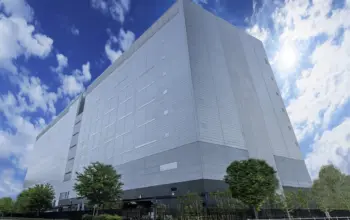
A similar situation occurred in Santiago, Chile. Google’s data center in Cerrillos faced heavy criticism and was even taken to court. In court filings, it was revealed that the facility consumed around 7.6 million liters of drinking water per day in an area already suffering from severe drought.
Is there a solution to this problem?
There is always a solution to every problem. In this case, we can take a lesson from what Google has done. The tech giant once faced major challenges regarding water usage for cooling its data center in Mesa, Arizona.
The data center built in Arizona had the potential to use up to 15 million liters of water per day. Which triggered public pressure. To address the issue, Google switched to a special air-cooling system that uses filtered outside air.
This approach drastically reduced—and nearly eliminated—the facility’s need for potable water for operations. This shift saves hundreds of millions of liters of water per year compared to data centers using traditional water-cooling towers.
However, air cooling in a hot and dry climate like Arizona requires more electricity. To balance the spike in energy consumption, Google made large investments in renewable energy such as solar, wind, and battery storage.
The target is for the Arizona data center to reach an 80% carbon-free energy supply on an hour-by-hour basis within one year of full operation. This aligns with Google’s commitment to 24/7 carbon-free energy operations by 2030.
In closing her article, María Montero emphasizes that the significant water footprint of AI does not mean we should abandon artificial intelligence. Instead, she highlights the need for a wise and sustainable approach.
“The way forward is not about abandoning AI but about building wise. AI systems that save more water than they consume. Regulations must ensure that data centers use water responsibly and that the communities hosting them receive direct benefits from their presence. Likewise, the social contract surrounding AI must ensure that the poor are not left to bear the costs of technologies designed to serve the most privileged.”